Return
to Rosy-Finch page.
FAQ's ABOUT FINDING
ROSY-FINCHES, PINE GROSBEAK AND NORTHERN PYGMY-OWL, AND MORE
Q. Several readers
have asked about the best time of day to see the Rosy-Finches.
A. We have seen them at all times of day. They
have been reliable in the morning around 9
to 10 AM. The Crest House opens at 9:30 AM, providing
access to the hanging feeder on the patio (and hot coffee or a
late breakfast). No matter what time you arrive, plan to stay at
least two hours, especially early in
the season when they seem to aggregate into one or two large flocks.
The number of tourists increases later in the day, especially on
weekends. Human disturbance may cause the birds to stop only
briefly or avoid the deck feeder as well as the
lower feeder next to the parking lot. The Rosy-Finches will also
avoid visiting a feeder when Steller's Jay is present.
Q. Where and when may Pine
Grosbeaks be found at or near Sandia Crest? A. Pine
Grosbeaks are rare and irregular winter visitors to the Sandias; they
do breed in the mountains of northern New Mexico. They may show
up anywhere from the Ponderosa forest to the Crest. They were seen at
the Crest feeding with the Rosy-Finches once, and may appear along the
higher reaches of the road to the Crest, especially in January and
February when there is good snow cover. They may be encountered
foraging in the sand and salt spread on the road after a snow. Be
alert for flocks of these beautiful large finches. Their calls
can be quite loud, or the members of the flock may "talk" quietly with
each other.
Q. I'll be
visiting family in Albuquerque around Thanksgiving (or Easter).
Will the Rosy-Finches be there yet (or still)? A.
Thanksgiving, maybe; Easter, no! We normally expected them to
arrive at the beginning of December and depart . mid March As you
can see in the table,
they showed up by the 20th of November the past two years, and lingered
until the end of March. There an aberrant record in 1970, cited
in Jerry
Oldenettel's Rosy-Finch Web page, of Rosy-Finches having been
seen away from breeding grounds in New Mexico in mid May. (Jerry
also makes a rather profound statement about Rosy-Finch viewing at
Sandia Crest: "If the birds stick here for a few years, this
could easily become the 'canonical' location for worldwide birders to
get their rosy finches since it is only an hour's drive from a major
international airport and the road is paved, maintained, and clear
throughout the winter.")
Q. What about seeing other
winter finches? A. Cassin's Finches can be numerous at
Sandia Crest and visited our yard feeders
at our former home in Cedar Crest (7000 feet elevation). During
the winter of
2002-3 our feeder visitors included 10 to 25 Evening
Grosbeaks, House Finches, American Goldfinches, Pine Siskins and the
usual host of winter residents. Both Evening Grosbeaks and
Cassin's Finches failed to show during the winter of 2003-4. Red
Crossbills, which sometimes
visit our feeder during the summer, were
notable by
their absence during the winter of 2002-3, not reappearing until
mid-summer 2003 when they bred in large numbers in the Sandias.
They usually
appear erratically during migration and in the winter, often in large
numbers. White-winged Crossbills have been seen at the Santa Fe Ski
area in past years, but we were not aware of any reports during
the winter of 2002-3. Check out the interactive maps at Cornell Lab of Ornithology's e-Bird.
Call up reports for each of the winter finch species and see if
they begin to migrate down from the mountains in Wyoming and Colorado.
Q. We also have received questions about
where to stay and about restaurants in the East Mountains. A.
We can recommend Elaine's Bed
and Breakfast (call 1-800-821-3092), which is on NM 14 in Cedar
Crest, about 1 1/2 miles south of the Crest Road intersection.
Elaine's is birder friendly and supports the American Birding
Association by advertising in "Winging It." An advantage of
staying overnight in Cedar Crest, at 7200 feet elevation, is that you
will be better acclimated to spend more time at 10,678 feet the next
day. For dining, in
addition to the Crest House you may wish to try birder-friendly
Kokopelli's
Restaurant and Kantina (click here for hours and links to menu
selections), which begins serving a great breakfast on
weekends and most holidays at
7:30 and is conveniently located on North 14 about a mile north of the
Crest Road intersection. Cedar Point Grille, at the
2.3 mile mark on NM 14, opens for breakfast at 7:00
AM except Monday and Wednesday. Also, for lunch
and dinner we like Ribs II Barbecue (closed Mondays) in the
Turquoise Trail Shopping Center at about the 3.5 mile mark of NM
14.
Wooby's
Coffee & Bistro,
located in the same shopping center, offers breakfast and a deli fare,
opening 6:30 AM Monday through Friday and 7:30 AM on weekends.
For a more complete list of nearby dining, lodging and shopping
see: http://www.turquoisetrail.org/members.htm
Q. Where/when is the best
place/time to see the Northern Pygmy-owl? A. The N.
Pygmy-owl that we have seen at the base of the Ski Area several times
since November 29, 2002
was also seen there by Robert Kyse on December 7, by Pat Newman on
December 31, 2002, and by Ryan Beaulieu and Raymond VanBuskirk several
times during
December, 2003 through February, 2004. It has a favored
perch, which is the telephone
wire
near the far (east) end of the parking lot that is opposite the Ski
Area (near
mile marker 7). As you ascend the Crest Road, look near the first
telephone pole, on the right, about 100 feet past the entrance to the
Ski Area, and in nearby trees. It is seen there most often during
the winter, but may appear any time of the year. On January 17,
2004, Tyler Bell and Jane Kostenko saw one at dusk on the power lines
off the west side of NM-14 about 1/4 mile north of the Cedar Crest Post
Office (about the 3.6 mile mark, 200 yards north of the Mountain
Christian Church, or about 150 yards south of the Corte de
Cañoncito intersection). Do not stop on this highway as
there are no
shoulders-- look for a side street and go back on foot to get a better
look if necessary. On January 5, 2003,
Tom Headly saw another from the
deck at Crest House. Mobbing chickadees
may
betray the owl's presence. Late afternoon (during the two hours up
until sunset) and just after sunrise have been the most productive
times to see this owl.
(Since it is a local breeder, it is easiest to find at and just
after sunset during May and June, when it is calling. Capulin
Spring has been a reliable location during breeding season).
To find the Northern Pygmy-owl, just keep
looking along the roadside. We have found the owl easier to see when we
are descending, maybe because we are looking down on it against the
sky. It stands out when perched on a wire or on a bare
New Mexico Locust tree. They have been sighted several times in
scrub oaks, which retain their leaves well into the winter, concealing
the bird. Look for a stocky big-headed thin-tailed bird
about the size of a bluebird sitting all by itself, near
the top of a 15-20 foot tree or on a wire. It seems to prefer the
area between the 4 and 8 mile markers on the Crest Road, but may appear
anywhere up to the Crest and even along NM-14. During summer, the
Northern Saw-whet
and
Flammulated owls are usually more common than pygmy-owls, in our
experience, so study their calls. Our local Northern Pygmy-owl
usually does not whistle a distinct couplet as do those in Arizona,
though the cadence may be slightly coupled: either
"whee////whee////whee////whee..." or "whee///whee////whee///whee..."
Q. Where do the Rosy-Finches spend
the summer? A. Each of the three North American species
has a distinct breeding range. The Gray-crowned is most
widespread, breeding well up into central Alaska and along the Bering
Sea, western Canada, and the mountains of central Idaho, western
Montana and northern Utah. The Hepburn's (Coastal) race of the
Gray-crowned nests in
the most western part of this range, and down into the mountains of
Washington and Oregon. The Black Rosy-Finch occurs over a fairly
wide range, but occupies the smallest amount of territory, breeding
only in scattered small, often roadless, areas of high mountains in
northern Utah,
northern Nevada, southern Oregon, parts of southwestern Montana and
Idaho. The Brown-capped Rosy-Finch breeds in the southern Rocky
Mountains, from southern Wyoming to the high mountains of
northern New Mexico.
Q. Have Rosy-Finches just
recently started wintering at Sandia Crest? A. No.
The feeding program has undoubtedly encouraged them to visit the
Crest House area more frequently (indeed on a daily basis every winter
since 1999-00), but they have been recorded erratically at Sandia Crest
since the 1950s. See Sandy Williams'
article for more information.
Q. When is the best time to visit
"The Log" at Capulin Spring? A. Any time between
May 1 and the first major snowfall. During the wet season
(usually early July through late August) the birds have less need to
concentrate at this important watering spot. For a full
discussion see the
article on "The Log."
Q.
Where are the American Three-toed Woodpeckers in the Sandias?
A.
(From Hart Schwarz) In the
Sandias this species is on the verge of extinction or, perhaps, may
already be extinct. From 1974 through 1988 the Three-toed could
be
found with regularity in the spruce/fir belt of the Sandias; however,
since then, i.e., during the past fifteen years, I have encountered it
only once: on the Ellis Burn on 10-13-96. Ironic for a bird
associated
with burns, this last sighting was the only one actually connected with
a burn. All my other records were from areas undisturbed by fire
and
dominated by Engelmann Spruce, generally above 10,000 feet. The
near-extinction of this woodpecker in the Sandias should be seen as a
local phenomenon, however, since the birds are still to be found
elsewhere in NM, such as the Zunis and the Jemez Mountains,
where they
frequently occupy a lower tier (7,500 ft. to 9,000 ft.) in the
Transition and Mixed Conifer zones, especially in places where the Blue
Spruce grows. Perhaps spruce of either species provides the
common
denominator of appeal, unless the habitat has become too crowded with
trees, as seems to be the case in the Sandias. ADDENDUM: See this page-- A pair and
possibly a third American Three-toed Woodpecker appeared near Sandia
Crest during the winter of 2005 and have persisted.
In early summer, "several" were
seen at the same place, raising the possiblity that they may have
returned to their former breeding grounds. They were all seen in
one general location, which is west of Kiwanis Meadow. Walk south
from the very lowest of the three parking lots at Sandia Crest, throug
the open gate along the dirt road that leads to Kiwanis Meadow.
As you approach the Meadow, look right and also follow the trail that
veers to the southwest towards Kiwanis Cabin and search the surrounding
wooded area. On July 16, 2010 two adults and one young three-toe
were seen near the Ellis Trail head by the Thursday Birders. Read the report on the Sandia Crest Birding FORUM with a link to Judy Liddel's blog with photos.. Nearby, another promising area worth searching for these
birds is the 10K
Trailhead, described in the Birder's Guide to the Crest Road
(LINK), although none have been reported there as yet. (Ken)
Q. We saw hunters along the
road to the Sandia Crest. Is hunting legal? A.
In the Sandia Ranger District, there is usually limited deer hunting by
bow or muzzle-loading firearms for two weeks in late November through
early December, and again for a week in mid-January. The bear
hunting season is over before the rosy-finches arrive. In 2004
there may be an Aug. 28 to Sept. 19 Bow hunt for bear and mountain
lion, and
the Sandia and Manzano Mountains will have an Oct. 15 to Nov. 15
firearm hunt. Hunters may not shoot from roadsides or near
buildings, and have not interfered with birding activities. Bow
hunters usually hide or stalk in areas away from trails. Just be
aware that they are present legally. They may not hunt after
sunset.
Q. What time does the sun go
down? A. The following table gives the time of
sunrise and sunset. The sun disappears about 20-30 minutes
earlier on the east side of the mountain. Temperature drops very
quickly after sunset. Summer owling (for Flammulated, Saw-whet
and Northern Pygmy-owl) seems most productive during the 1-2
hours after "official" sunset, while in the winter, the Northern
Pygmy-owl has been heard and seen most often in the hour just after
sunrise and just before sunset.
Sunrise and
Sunset, Albuquerque, NM
To
assist you in planning birding and
owling (exact times vary year to year)
|
Mountain
Standard Time
Nov 1 6:27p - 5:13p
Dec 1 6:56a - 4:55p
Jan 1 7:15a - 5:06p
Feb 1 7:06a - 5:35p
Mar 1 6:36a - 6:02p |
Mountain
Daylight Time
Apr 1 6:54a - 7:28p
May 1 6:16a - 7:52p
Jun 1 5:54a - 8:15p
Jul 1 5:56a - 8:24p
Aug 1 6:15a - 8:10p
Sep 1 6:39a - 7:34p
Oct 1 7:01a - 6:51p |
For exact times of sunrise and sunset
anywhere and any day of the
year, select "Data Services" at the US Naval Observatory Web Site: http://aa.usno.navy.mil/
AVERAGE TEMPERATURES AND PRECIPITATION AT SANDIA CREST, ALBUQUERQUE AND SANDIA PARK
Average high temperatures at Sandia Crest are 25 degrees (F) colder
than in Albuquerque. More importantly, the lows average 13 degrees
below those in Albuquerque. Sandia Park is at the base of the
road to Sandia Crest, and is a mile lower in elevation, and has 1/2
less snow than at the Crest. Snowfall averages about 10 feet annually
at the Crest. Since mountain weather may produce unexpected
sudden changes, be prepared, and dress in layers.
Average Temperatures & Precipitation At Sandia Crest New Mexico (10, 678 feet Elevation)
Source: http://www.wrcc.dri.edu/cgi-bin/cliMAIN.pl?nmsanc |
|
Jan |
Feb |
Mar |
Apr |
May |
Jun |
Jul |
Aug |
Sep |
Oct |
Nov |
Dec |
Annual |
| Average High (F)
|
26.8
|
28.3
|
32.6
|
42.2
|
53.2
|
63.9
|
66.3
|
62.9
|
57.1
|
47.8
|
36.6
|
29.5
|
45.6
|
| Average Low (F)
|
13.1
|
14.1
|
17.3
|
24.7
|
33.9
|
43.1
|
47.4
|
45.6
|
40.7
|
32.5
|
22.2
|
15.5
|
29.2
|
| Average Precip (in.)
|
1.96
|
1.91
|
2.34
|
1.26
|
0.91
|
0.95
|
3.19
|
3.38
|
1.82
|
1.83
|
1.39
|
2.01
|
22.94
|
| Avg SnowFall (in.)
|
19.3
|
23.0
|
23.3
|
10.7
|
3.8
|
0.1
|
0.0
|
0.0
|
0.1
|
5.3
|
10.0
|
20.7
|
116.2
|
| Avg Snow Depth (in.)
|
17
|
22
|
23
|
10
|
1
|
0
|
0
|
0
|
0
|
1
|
2
|
9
|
7
|
|
Average Temperatures and Precipitation in Albuquerque, New Mexico (5000 feet Elevation)
|
| |
Jan |
Feb |
Mar |
Apr |
May |
Jun |
Jul |
Aug |
Sep |
Oct |
Nov |
Dec |
Annual |
| Avg. High |
46° |
54° |
61° |
70° |
78° |
90° |
92° |
88° |
81° |
71° |
57° |
47° |
70° |
| Avg. Low |
21° |
26° |
32° |
38° |
48° |
58° |
64° |
62° |
55° |
44° |
31° |
24° |
42° |
| Mean |
34° |
40° |
47° |
55° |
64° |
74° |
78° |
76° |
68° |
57° |
44° |
35° |
57° |
| Avg. Precip. |
0.4 in |
0.5 in |
0.5 in |
0.5 in |
0.5 in |
0.6 in |
1.4 in |
1.6 in |
1.0 in |
0.9 in |
0.4 in |
0.5 in |
8.8 in |
|
Average Temperatures and Precipitation in Sandia Park, New Mexico (7000 feet Elevation)
|
|
| |
Jan |
Feb |
Mar |
Apr |
May |
Jun |
Jul |
Aug |
Sep |
Oct |
Nov |
Dec |
Annual |
| Avg. High (F) |
42° |
46° |
52° |
62° |
71° |
82° |
84° |
80° |
74° |
64° |
52° |
44° |
63° |
| Avg. Low (F) |
18° |
22° |
27° |
34° |
41° |
48° |
54° |
52° |
47° |
36° |
27° |
20° |
36° |
| Mean (F) |
30° |
34° |
40° |
48° |
57° |
66° |
70° |
67° |
61° |
51° |
40° |
32° |
50° |
| Avg. Precip. |
1.3 in |
1.3 in |
1.4 in |
1.0 in |
1.1 in |
1.0 in |
3.0 in |
2.9 in |
2.0 in |
1.6 in |
1.3 in |
1.3 in |
19.2 in |
Go to top of
BIRDING SANDIA CREST AND VICINITY
October 17, 2004
Dear Friends of the Sandia Crest Rosy Finch Project!
We are the new
coordinators for the project since Ken and Mary Lou have moved to
Florida. We are very new to birding, but thought we could, with
your help, manage the logistics of keeping this great project
running.
Ken will continue to
maintain the website, 1-800 number and be the 'Chief Advisor'!
We are getting ready to
start up the season and wanted to get in touch with those of you who
have been part of the project in the past and/or who have expressed an
interest in being involved.
We are planning to install
the feeders and put out the Sightings Log Book at the Crest the weekend
of November 6th. At that point, we will begin stocking the
feeders about 2 times a week, as needed. As in past years, we
plan to store a supply of both types of seed under the Visitor Center
Desk at the Crest. We will arrange with our generous donors to
get resupplied as needed throughout the season.
We are usually at the
Crest Visitor Center on Wednesdays as USFS volunteers. But we
WILL need volunteers to fill in periodically and to go up
routinely on Fridays or Saturdays to check and restock the seed in the
feeders. We know that several people have done this in the past
and/or have volunteered to help out this season. We would ask anyone
who is willing to help to send us
an email stating what you might be able to do so we can coordinate
the efforts, have some backups and avoid duplication.
Please feel free to
pass this on to anyone you think would be interested!
Thank you for helping us
to continue this project that Ken and Mary Lou Schneider and all the
previous supporters have done so much work to establish!
Fran & Dave
Fran Lusso and Dave Weaver
Sandia Park, NM 87047
505-286-8899
250-6588 (cell - Fran)
250-3467 (cell - Dave)
==================================================
After the rosy-finches depart there is always great birding in
the Sandias.
Here is a note that describes a Texas birder's visit to Capulin Spring
(June 13, 2004):
Ken, we just got home from our trip out West and I wanted to
give you a report on our stop at Capulin Spring. I only had one
evening free to bird, but I got to the spring a couple of hours before
dark and had a great time watching the birds come to the spring to
bathe. I had a long list of birds that are common to the area,
but are birds we don't get to see very often in Central Texas. I
started walking the road between the closed gate and the Snow Play Area
shortly before dark until well after dark, but did not see or hear any
Northern Pygmy-Owls. I did get to see an interesting bird
behavior that is probably pretty common, but is something I've never
seen before. I saw a Red-breasted Nuthatch flycatching repeatedly
from an exposed perch. I didn't know they did that. After
leaving the Snow Play Area, I went back to the spring in the hopes of
hearing a Northern Pygmy-Owl there. I again struck out on the
Northern Pygmy-Owl, but I got my lifer Northern Saw-whet Owl
instead!! Almost immediately after I sat down, I heard two
Northern Saw-whet Owls calling. One sounded very close to the
picnic table so I started walking toward the area he was calling
from. I saw something move in the dark and pointed my flashlight
at a Northern Saw-whet Owl about 10 feet from me. He was so close
that I couldn't even use my binoculars. I watched him for about
30 seconds and then turned off the flashlight and retreated. He
resumed calling as soon as I left the area. I also
heard a Flammulated Owl and Common Poorwills calling in the area.
I talked to a lady shortly before dark who told me that a Northern
Pygmy-Owl was seen daily at the ski area during ski season. We're
going out West again in late July, so I may try that area next
time. I heard that you're moving to Florida soon, but if you see
or hear a Northern Pygmy-Owl in the area before you leave, I would
appreciate hearing the details. Thanks again for sharing your
information about this fantastic birding area.
Rich Damron
==================================================
CLICK
HERE to see the report of
species and numbers of birds seen at three locations during summer bird
walks. ]
HISTORY OF THE
ROSY-FINCH FEEDER PROJECT
Unique birds attract worldwide
visitors to Sandia Crest
By Kenneth C. Schneider
and Mary Lou Schneider
Special to the Telegraph as submitted, January
2002 (Truncated version was published)
Birdwatchers from all over the
world are flocking to Sandia Crest to observe three species of birds
from the north that have been unusually abundant during the past three
winters [1999-2000, 2000-2001 and 2001-2002].
When the tame little wanderers, members of a
group of perching birds often called winter finches arrived in an
unusually large flock of 80 birds in late 1999, we spread some birdseed
at the edge of the roadway near the entrance gate to the Crest antenna
complex in an effort to keep them coming. It worked, and the 1999-2000
winter was a banner year for naturalists who wanted to add the birds to
their life lists.
After we moved from Dallas to Cedar Crest in
1993, we heard that Sandia Crest is sometimes visited by
rosy-finches. We and other birders would rush to the Crest to see
them but were often disappointed. They came and went erratically until
1999. When news that the birds had returned in November 2000 traveled
fast over the Internet, birders from as far away as Scotland made
special trips just to see them.
An unprecedented invasion of these inconspicuous
but very handsome little birds occurred the winter of 2001-2002. During
a two-week period in February, visitors from Tennessee, Arizona,
Oregon, Indiana, Texas, North Carolina and Hawaii traveled by plane and
car to see them. A group from Denmark and Scotland was there as
the sun came up one crisp morning. They were rewarded with
splendid, close-up views of the three species, called black,
brown-capped and gray-crowned rosy-finches. Was this just luck or
did the feeding cause their abundance?
The three species of rosy-finches spend their
summers on treeless tundra on mountaintops and in the Arctic. In
the winter, all three wander south along mountain tops, to feed on weed
seeds as well as on flying insects that are caught by updrafts and
deposited, frozen, on snowfields at crests such as Sandia. Two
members of the group, known as the brown-capped and the black
rosy-finches, share the distinction of being ALL-AMERICAN BIRDS with
less than a dozen other bird species whose ranges are limited entirely
to the lower forty-eight. Only in Colorado and New Mexico, and
only in the dead of winter, can all three species of rosy-finch be seen
together.
Although the informal feeding by the public may
well have contributed to the abundance of rosy-finches, it seemed to
get unsightly and even dangerous when someone drained their radiator at
the upper lot contaminating a large pile of seed.
We approached Beverly DeGruyter, Chief Biologist
for the Sandia Ranger District, and appealed for help from other
interested birders. As a result, the U.S. Forest Service and the Central New Mexico Audubon
Society teamed up to erect a special feeder for the rosy-finches at
Sandia Crest. The feeder was donated by Wild Birds Unlimited
Northwest, Albuquerque and the seed is being supplied courtesy of prdseed.com of Tijeras. Tom
Duncan, resident manager of the Sandia
Crest House, has been very helpful. The feeder is removed after the
rosy-finches depart, probably in late March, and is put up again in
November.
Before 1999, the Taos Ski Valley was the popular
place to see these three species together. Now Sandia Crest
enjoys its reputation as the most accessible location in the world for
those who seek rosy-finches.
Visiting birders contribute significantly to the
local economy. New Mexico has a wondrous collection of
specialized habitats that attract a great variety of birds. There are
1,913 species of birds in North America. Despite its inland
location, New Mexico, with 500 species, ranks fourth among the states
and provinces of North America.
New Mexico is an inland paradise for the birding
bunch crowd and a haven for birds. We feel fortunate to have the
rosy-finches here. We hope for their annual return and for the return
of human visitors to Sandia Crest.
WINTERS of
2002-2003-2004-2005-2006-2007-2008
PROGRESS
REPORTS
Notes from 2007-2008 Season
The Crest House has been officially up
for sale since 2006, but there is no information yet as to a possible
buyer. Let's hope that it keeps its birder-friendly ambiance (with
great chili and early access for the banders, not to mention tolerance
for scopers and photographers who linger long near the windows as their
coffee gets cold) and is not bought by a cookie-cutter fast-food chain.
Avi-tourism has meant good business for the Crest House and also for
other East Mountain businesses since the feeders were installed in
1999. Over 1300 sighting reports have been recorded in the Crest House
logs by birders, and staff there have told me that fewer than one in 10
birders ever sign it. I have seen organized groups of as many as 20
birders leave without ever recording any observations. Even the
conservative estimate translates into over 10,000 customers who
otherwise may never have ventured up to the top of the mountain.
Many
of these people would have never heard of the place, much less visited,
if it were not for the reputation of Sandia Crest as the “Rosy
Finch Capital,” and the Sandia Crest House its
“Capitol.” One indicator of the connection between
the bird and the building is the fact that a Google search of
“rosy finch” + “Sandia Crest House” yielded 921
hits, while Sandia Crest House is associated with “gifts”
248 times and “food” only 217 times. See Ken's Blog for
more on the Crest House sale.
Look for the Rio Grande Bird Research banding crew on most Sunday
mornings during the winter. Remember that birders do not have
access to Crest House until it opens, at 9:30 AM. Bad weather can delay
opening time or even result in closure, as staff must make their way up
before the facility can safely open to the public. For more information
about arrival and departure dates, and patterns of abundance since
2000, see full records in the Sightings Logs. See visitors' e-mail and
detailed reports from the banders at the CORRESPONDENCE link.
AN ENCOURAGING FORECAST FOR FINCH WATCHERS DID NOT MATERIALIZE
While based more heavily upon boreal tree seed crop reports and
observations in eastern Canada, Ron Pittaway's Winter Finch Forecast
for 2007-2008 provided New Mexico with some hope for increased
numbers of Pine Grosbeaks and Red-breasted Nuthatches this winter. On
the other hand, it suggested that Pine Siskins might remain rather
scarce, and offered a mixed picture for Red Crossbills. The previous
winter's poor Red Crossbill and Pine Grosbeak showings seemed to
correlate with his previous forecast for the winter of 2006-2007, which
was based upon bumper cone crops in the far north.
Rosy-finches, which do not feed upon conifer seeds, and Cassin's
Finches, which breed into western Canada, were not included in his
forecast (excerpts follow, with Ken's remarks italicized)):
* PINE GROSBEAK: This grosbeak will irrupt south of
the breeding range because crops on native mountain-ashes (rowan
berries) are generally poor in northeastern Ontario and across the
boreal forest [There were no reports of Pine Grosbeaks at Sandia Crest
during the winter of 2007-2008].
* RED-BREASTED NUTHATCH: They have been moving south
since mid-June presumably because of the poor cone crop in central
Canada. Almost all Red-breasted Nuthatches will depart Ontario's boreal
forest by late fall...[Not unusually abundant in 2007-2008]
* EVENING GROSBEAK: This grosbeak will irrupt south
of the boreal forest this fall because tree seed crops are generally
very poor in northeastern Ontario and western Quebec...[This finch
usually does not venture above 8000 feet in the Sandias-- there were
several reports of flocks in the Albuquerque aea, but they were not
abundant.]
* PINE SISKIN: Similar to the White-winged
Crossbill, most Pine Siskins departed Ontario this past summer,
presumably attracted to huge spruce and fir cone crops in Alberta and
British Columbia and/or to big spruce and balsam fir cone crops in
Newfoundland and Cape Breton Island and probably elsewhere in the
Atlantic Provinces... Large southward irruptions occur when cone crop
failures span much of Canada...[No unusual irruption occurred the
winter of 2007-2008]
See Cole Wolf's
article about the record-breaking winter of 2006-2007 in the Summer 2007 Burrowing Owl, the Central New Mexico Audubon Society newsletter. He discusses some
preliminary findings from the isotope study,
suggesting that Gray-crowned Rosy-finches may be coming from above the
Arctic Circle. It will be interesting to see differences, if any,
between the origins of the interior and coastal (Hepburn's) races.
Dave Weaver took the last feeder down on April 2, 2007. On March 26, he
reported that the finches were getting pretty scarce.
"The
folks at the Crest think that they are (essentially) gone, and I tend
to agree. I plan to check again next week and if nobody has seen
a finch during the intervening week I probably will take the deck
feeder down." Aaron Smoot reported seeing one in flight on March 31.
And so we closed a very successful rosy-finch season. Dave Weaver and
Fran Lusso , US Forest Service Volunteers put it a great deal of work
this past winter, assuring that the feeders were maintained and filled,
and manually entering all 104 of the sighting log entries into the
Winter 2006-7 data base. We thank them for helping make this past
winter the one with the largest flock of rosy-finches since the project
began in 1999!
We are also most grateful to all of you who contributed by donating
seed, especially Lee Hopwood of the Wild Bird Center in Albuquerque,
who also donated the new feeders. We so appreciate the
hospitality of Gene Romero and the entire staff of Sandia Crest House.
We especially thank the visitors who, by traveling to this unique site,
demonstrate to the Albuquerque and East Mountain community that birding
is very important to the local economy. Thankfully, there were also
many skiers this winter, but the birders have really made their
presence known! After a horribly scant snow season the
previous winter that prevented its opening, Sandia Peak ski area closed
March 11, 2007 with all trails still open on the last day.
For more information about arrival and departure dates, and patterns of
abundance since 2000, see full records in the Sightings Logs. See
visitors' e-mail and detailed reports from the banders at the
CORRESPONDENCE link.
There are still many birding opportunites in and around Albuquerque.
Central NM Audubon maintains an active field trip schedule. Also see
the Thursday Birder trip schedule. There are also regular weekend
morning bird walks at Rio Grande Nature Center State Park in
Albuquerque.
Looking Back on the Winter of 2006-2007
Dave and Fran put up the feeders on October 30, and rosy-finches
appeared almost immediately, with confirmed sightings since November 2.
As in previous years, Blacks predominated early, but all three species
have been identified. This winter there was an unprecedented increase
in the number of Gray-crowned Rosy-Finches at the feeders, while
Brown-capped were unusually scarce. There were a couple of log entries
that gave high counts of Brown-capped, but they did not fit the pattern
of other observations and banding results. (First year Black and
Gray-crowned can be hard to differentiate from Brown-capped. See this
link for
IDENTIFICATION TIPS).
The final banding session was on Sunday, March 18, but no birds were
captured. Review the banding summary (below) and also full reports in
the Correspondence links. This winter (2006-2007), Clark's
Nutcrackers, Red Crossbills (up to 65) and Pine Siskins were
intermittently present, as well as the
American Three-toed Woodpecker,
and there were only a few Cassin's Finches, and no Pine Grosbeaks. A
highlight has been the persistence of American Three-toed Woodpeckers
in the Kiwanis Meadows area. This species was thought to have
disappeared from the Sandia Mountains.
Banding Report
On January 7, 2007 the Rio Grande Bird Research team banded 104
rosy-finches, the most they ever banded in one day. The next Sunday,
January 14, they surpassed this record by banding 127. On these two
days alone, they newly banded 82 Gray-crowned Rosy-Finches, of which 47
were of the Hepburn's race! As Nancy and Steve Cox put it, "Last
year we were happy with the 5 Hepburn's banded." Their success
continued with 189 captures on January 21, of which 116 were
recaptures. They additionally saw about 200 unbanded birds at the
feeders. On January 28 they captured 80 more, newly banding 57. Cole
Wolf obtained some dramatic images of a large flock of rosy-finches
mobbing a Red-tailed Hawk. Steve Fettig took some beautiful photos of
all four morphologically distinct adult rosy-finch forms.
These may be seen on the photo page.The
February 4th and 11th session yielded 45 and 93 new captures
respectively. Raymond got out on February 25th and newly banded about
50 rosies, including 2 Brown-capped with the rest about evenly divided
between Gray-crowned (including some Hepburn's) and Black.
This winter (through March 11, 2007), 773 rosy-finches (579 Blacks, 186
Gray-crowned [including 104 Hepburns], and 8 Brown-capped) were newly
banded, and 22 were recaptured from previous seasons. One
Black Rosy-Finch was recaptured for three winters in a row.
Click here for totals by species since 2004.
==================
The researchers exceeded their goal of banding 1000 rosy-finches as
part of the isotope study project. Since January 2004, 1197
rosy-finches have been newly banded. Tiny feather samples are taken for
isotope studies that permit UNM researchers to determine the location
of the birds' breeding grounds. Preliminary results indicate that the
Gray-crowned species migrates a great distance. It will be interesting
to learn the origins of the Coastal/Hepburns birds that have invaded
this winter. More information about isotope studies is
available here.
Small flocks of all
three species were last reported on April 13th, and only one Black
Rosy-Finch was present on April 19, when Dave Weaver took down the
feeders. The next day, another was seen by Tom Duncan. On May 23,
US Forest Service-sponsored Tuesday morning bird walks resumed in the
Sandias, and Central NM Audubon continued an active field trip schedule.
The final banding session was on April 2. The banders captured 30
rosy-finches, but all were same-season repeats, and only two unbanded
birds were seen. On March 24, only 2 Black Rosy-Finches were
reported, the first day this winter that all three species were not
seen, but 68 of all three species were captured the next day!
About 20 were at the feeders on April 6. On April 11, Dave Weaver
went up to the Crest to fill the feeders and found 10 rosy-finches
still visiting. He reported, "A cool day with a nice dusting of rime
ice on the decks and railings. There are still some rosy finches
in evidence, although Gene and the other folks think that the main
groups are gone."
During the 2005-2006 winter season the Rio Grande Bird Research crew
set a new record. They newly banded a total of 298 rosy-finches:
44 Brown-capped, 221 Black, and 33 Gray-crowned, including 5 Hepburn's
race. They were not able to capture a 6th unbanded Hepburn's that
was sighted. In addition, there were 255 recaptures, including 7
Brown-capped and one Black first banded in December, 2004, and a Black
that was originally banded on March 20, 2005.
Since the winter of 1999-2000, the last Rosy-Finch flocks of the year
at Sandia Crest have been reported anywhere between March 5 to April
15th, with stragglers as late as March 17 to April 18th, so this year
we had a record late departure date. Generally, numbers of Rosies
visiting the Crest House feeders begin decreasing after the first week
in March. Last year (2004-5), all three species persisted in mixed
flocks of 30 or so through the second week in April. For
more information about arrival and departure dates, and patterns of
abundance since 2000, see full records in the Sightings Logs.
We flew in from Florida to visit Sandia Crest on February 14. There was
practically no snow on the ground, the driest we have ever seen Sandia
Crest in mid-February. As we have observed previously, the birds tend
to visit more frequently and in smaller flocks later in the
winter. During the four hours we spent at Crest House, there was
hardly ever a time when rosy-finches were not present at one feeder or
another. Coincidentally, on February 12 there were articles about the
NM Rosies in both the Albuquerque Journal and the South Bend (Indiana)
Tribune. We had just returned from a visit to Costa Rica and Panama
that included some birding-- check out our report.
The feeders were put up on October 26th. The first birds, all Black
Rosy-Finches, appeared at the feeders on the morning of November
12. See visitors' e-mail and detailed reports from the banders at
the CORRESPONDENCE link.
An AMERICAN THREE-TOED WOODPECKER has been seen intermittently on the
trail to the Kiwanis Meadows on Sandia Crest (use the search feature of
this Web page, or the Birders Guide to Crest Road to find these and
other nearby birding locations). There have been no recent reports of
Cassin's Finch, Red Crossbill at the Crest (except for one male
crossbill, seen at the feeders on January 31), Clark's Nutcracker or
Pine Grosbeak. Pinyon Jays and Evening Grosbeaks have been very scarce
or absent at lower elevations. Please tell us about these and any other
species you may see. Please record your sightings in the log at Crest
House Visitors Center (which now contains over 150 entries), and report
them to
Matt Baumann for the NM RBA as well as to us.
On November 27, 2005, the first day of banding, Nancy Cox of Rio Grande
Bird Research reported that 70 rosy-finches (plus one same-day repeat)
were banded by 2:15 PM, their best single day of banding up at the
Crest House. Laurel Ladwig has posted a
slide
show that captures some of the excitement of that record-breaking
day of banding, along with some nice snow scenes.
On Sunday, December 11, the team newly banded 59 rosy-finches, plus 6
same-season recaptures. At this point, the capture/recapture
formula produced a population size estimate of 660 birds with a
standard error of plus or minus 220.
Notes from 2004-2005 Season
The winter of 2004-2005 produced records for the earliest
arrivals, the
latest
flock sightings, and the latest departure of the flocks. The
rosy-finches arrived on
Sunday, November 7th, 2004, the earliest date
they
have been seen at Sandia Crest since 1954, when the birds were first
recorded there. This winter the East Mountains
have recorded the most moisture since the 19th century, and the ski
area
ended its season in late March with all 31 trails open with an 8 foot
base. Approximately 180 inches of snow fell at the Crest
House. Gene
Romero reported on March 30th that the entrance to the Crest House
looked like a tunnel.
As of March
20th the flock size was
down and the
birds were singing, so their departure appeared imminent. On
March 23, 60-70 Rosy-Finches of all
three species were recorded in
the log, and a Pine Grosbeak was seen at Mile Marker 4. The snow
surface was above the roof of the rest rooms, and more was expected!
On Easter Sunday, March 27, 2005 several observers, including the
banding team, watched from 9 AM until 3 PM and failed to see any
rosy-finches. This was the first day since November when the
birds did not put in an appearance. They did show up the next
day, and about 30 were seen again each day through March 30. On
the
afternoon of March 31, Linda and Ralph Browning reported 80 to 90
rosy-finches of all three species, but over a week went by without any
reported sightings, until they reappeared on April 10th, to finally
depart on April 18th.
EAST MOUNTAIN
TELEGRAPH ARTICLE ABOUT BIRDERS AT SANDIA CREST (March 3, 2005) "All three species of
rosy-finches— black, brown-capped and gray-crowned— can be seen
regularly from the heated comfort of the Sandia Crest House restaurant.
The mountain birds normally are so tough to find that birders from 12
states have made the trek up to the Crest to see them in the past
month..."
Roof
damage from the heavy snowfall in mid-February caused the Crest
House to close on Monday, February 21. Despite repair work,
they were able to open up for business the next day.
Reports from visitors are below.
All
three
species were
present,
including Hepburn's race of the Gray-crowned, along with several
reports of Pine Grosbeak flocks of up to ten individuals,
many Pine Siskins,
Red-breasted Nuthatches, Mountain Chickadees,
Gray-headed, Oregon and Pink-sided Juncos. Cassin's
Finch have been reported occasionally since early January, but there
have been
few reports of Clark's Nutcrackers and
Red
Crossbills. On February 9, 2005 Loren Hansen of Iowa took photos of
the Northern Pygmy-owl at the Ski Basin parking lot, and on
March 6 a group from Michigan saw it again at mile post 3. The
New Mexico RBA reported sighting of 11 PINE GROSBEAKS beside the road
above the 10K Trailhead on March 18 . Of great interest has been
the flock of BOHEMIAN WAXWINGS that has been visiting the Santa Fe area
during the middle of March. Latest sightings have been near the
Randall Davey Audubon Center at the end of Canyon Road in Santa
Fe. On March, 31 were reported, and about 20 were present
on March 19. So far there have been no reports from the Sandia
Mountains.
The
researchers have
banded 96 rosy-finches so far
this winter, and estimate a total of 100-150 are using the
feeders this winter. Try to note how many of the birds you see
have bands and enter this number into the sightings log at the Crest
House Visitors Center. The banders will have an accurate count as
it is difficult to see the bands
in the field, but this statistic gives a rough idea of the total
number of birds present (i.e., if no new birds are joining the flocks
and the birds distribute themselves evenly between the several flocks
that are up there now, and an average of 50% have bands, there are 96x2
or 192 birds visiting the feeders).
Of course, the
flocks
may segregate
themselves, causing some flocks to have a much higher or lower
percentage of
banded members, and we truly do not know that we are seeing the same
individuals all winter. Color banding, planned for the future,
would shed light on this aspect ot their behavior. There is so much yet
to be learned! Banding continues into March, 2005. Check
with Ryan Beaulieu
for schedule and details. Be sure to check
the weather
and links
to live videos of conditions, as well as highway information.
==================
On January 28, 2005
Diane Touret saw six PINE GROSBEAK at the 10K Trailhead
parking lot.
Jim Joseph on January
30, 2005 identified an AMERICAN THREE-TOED WOODPECKER on Trail 130
between the Kiwanis
Meadow and the Crest House in the Sandias. This species has been
presumably absent from the Sandias for at least ten years. [Ken hiked the 10K
Trailhead in June, 2004 (Click here and then scroll
down for a Panoramic winter view of this spectacular location) and
followed the trail that borders the Crest Aspen clearcut and controlled
burn of 2003. Fire-weakened Douglas-fir and a few surviving
Corkbark Fir and Englemann Spruce seem to provide ideal habitat for the
exterpitated American Three-toed Woodpecker. We hope that birders
will continue the search for this species.]
FLASH from the
NM RBA (June 9, 2005): TWO AMERICAN THREE-TOED WOODPECKERS were
photographed on June 4 on Sandia Crest east of Albuquerque on the trail
that leads to the Kiwanis Meadows from the lower parking lot.
They were 100 yards down from the gate at the south end of the lot near
several downed trees on the left hand side of the trail. A
drumming male was seen on June 5, and on July 7 a female was located to
the right side of the same trail, at the edge of Kiwanis Meadows.
"Several" were seen later in July, suggesting successful breeding.
All
three Rosy-Finch species were present every day during the winter of
2004-2005. They appeared earlier than ever, on November 7,
2004. This winter marked the greatest measured precipitation
since records began in the late 1800's. The ski area enjoyed an
incredibly succesful season, with all trails open for most of the
winter and into early spring.
Notes
from 2003-2004 Season
During
the winter of 2002-2003 there
was not a single day when we failed to see (usually
all 3 species of) rosy-finches. Cassin's
Finches, Pine Siskins and Red-breasted Nuthatches were abundant at the
Crest, and Evening Grosbeaks abounded on the eastern slope, but they
were missing during the winter of 2003-2004. Brown-capped Rosy-Finches were essentially absent the entire winter of 2003-2004.
Identifying
rosy-finches as to
species is not always easy. Some can be picked out as definite
Gray-crowned
(Interior) Rosy-Finches, and others are definitely Blacks.
Many others have
enough
black
coloration to be presumed as Black (female and first year birds), but
some are quite intermediate, lacking warm cinnamon coloration on the
contour feathers that looked dull brown, but not black. We have
been cautious about identifying these as (Interior) Gray-crowned Rosy-Finches.
The Coastal/Hepburn's
Gray-crowned may also appear very dark,
almost the same color as some of the Blacks. Later in the winter
its color may
"warm up" or become somewhat rusty. During February, 2004 a
possible
Brown-capped was reported by a couple of observers. If you see a
"Brown-capped" Rosy-Finch with a leg band, better read on. Ryan
Beaulieu
was banding rosy-finches on Sundays with Rio Grande Bird Research, and
offered this information:
Ken,
How
have you been? I just wanted to say that we banded 9 Rosy Finches
this weekend [February 29, 2004] with almost half of them being
interior
gray-crowneds. Be careful because the gray-crowneds look a lot like the
blacks and we had to carefully do different measurements and look at
different feather groups to decide on gray-crowned or black. Also, we
think we have figured out what the “possible brown-capped” that
everyone has been reporting is. We banded an interior gray-crown that
looks very similar to a brown-capped! But, it is indeed a gray-crowned.
I just thought I would let you know of this. Good Birding!
Cheers,
Ryan
Beaulieu CLICK
HERE TO SEE CHARLES
HOWELL'S PICTURES AND THE ID CHALLENGE
We have found in past years that the
early flocks
tend to visit less frequently, probably because the scant snow cover
affords plenty of foraging opportunities all along the spine of the
Sandias. The wind also may make the birds stay close to the
ground. In 2002 all three species arrived on November 19th
and were present daily
through the winter into late March. We
set out the Rosy-Finch feeders on October 19th, 2003, in
hopes of attracting
them earlier than the prior
year, and the first rosy-finches (three Blacks) were sighted on
November 15th.
Fellow USFS Volunteers
David and Karen Halvorson, and Dan Benton help
tend the feeders. Melissa Howard of CNMAS as
well as Corine Howard, Chris Michel and Nancy Baczek offered to fill in
for us
as
necessary. Thank you all!! Until the winter of
2004 Mary
Lou and Ken usually filled the feeders every Tuesday morning and also
provided
interpretation for the public. Visitors are
encouraged to donate seed (hulled
sunflower seed only for the deck
feeder, and black oil only for the two hoppers), and if able, to
fill
the feeders if they find them empty. A small supply is
maintained at the Visitors Center under the desk, just inside the door
to the Crest House. Using the more expensive hulled seed
exclusively for the deck feeder not only cuts down on litter, but also
means less work for the birds as they can gobble up quite a few
calories during a very brief visit!
When
you see rosy-finches (or other birds of note), be sure
to enter them in the log at the USFS
Visitors Center at the desk near the entrance
of the Sandia
Crest House Gift Shop, and report them by
e-mail to Matt Baumann who compiles the New Mexico RBA, or to the AZ/NM RBA,
and to Cornell
Labs eBird.org.
To listen to a tape of recent sightings call the NM RBA Hotline at 505-884-3269. If there are question or problems,
please notify Fran and or Dave.
Also,
when you
patronize local merchants, wear your binoculars and let them know you
are birders, here to see
the "Rosies." You will contribute to the increasing
recognition of the importance of avi-tourism to the East Mountains
economy.
 Gene
Romero (pictured to the left),
Resident
Manager of the Crest House, was concerned about numerous Red Crossbill
window
strikes. The
windows of the gift
shop and
restaurant are now adorned with hawk
silhouettes and chickadee appliqués, donated to Central NM
Audubon and put up by Ryan Beaulieu and Raymond VanBuskirk. Central New Mexico
Audubon recognized
Gene and his staff for his
support of the Rosy-Finch project. Ryan
obtained US Forest Service approval of a plan to conduct rosy-finch
banding at the Crest beginning in the winter of 2003-2004, in
cooperation with Rio Grande Bird
Research, Inc. Banding commenced on January 4, 2004, when a
single first winter Black Rosy-Finch was banded. See article
on
Sandia Crest Rosy-Finches and the banding proposal in JAN-FEB
2004 Central NM Audubon Society Newsletter.
Gene
Romero (pictured to the left),
Resident
Manager of the Crest House, was concerned about numerous Red Crossbill
window
strikes. The
windows of the gift
shop and
restaurant are now adorned with hawk
silhouettes and chickadee appliqués, donated to Central NM
Audubon and put up by Ryan Beaulieu and Raymond VanBuskirk. Central New Mexico
Audubon recognized
Gene and his staff for his
support of the Rosy-Finch project. Ryan
obtained US Forest Service approval of a plan to conduct rosy-finch
banding at the Crest beginning in the winter of 2003-2004, in
cooperation with Rio Grande Bird
Research, Inc. Banding commenced on January 4, 2004, when a
single first winter Black Rosy-Finch was banded. See article
on
Sandia Crest Rosy-Finches and the banding proposal in JAN-FEB
2004 Central NM Audubon Society Newsletter.
Cassin's Finches
were not reported at the Crest during the winter of 2003-2004
despite their abundance the prior three winters. In
early November, when we drove up to fill
the
feeders
we saw a Williamson's Sapsucker at
about the 7 mile mark near the base
of the ski lift (We took this
picture of a brightly
colored male Williamson's Sapsucker in our yard. A pair visited our yard
pond occasionally all winter). Red
Crossbills may usually be seen along the higher reaches of the
road to the
Crest, especially at the 10K Trailhead.
Red-breasted Nuthatches can be scarce at the Crest but may be found
around
10K. The roads to Cienega Canyon, Capulin Spring and Nine Mile Picnic
Area
are closed and barricaded for the winter.
The Sandia Crest Rosy-Finch
feeder project is a private undertaking that came about through the
efforts of the Central New Mexico Audubon Society and with the
cooperation of the US Forest Service, Sandia Ranger District. The
feeders and seed were donated by local merchants, and many visitors
have also contributed seed. Its success is entirely dependent
upon the good will of the Crest House, a private business that leases
the land on which the feeders are located, and more importantly,
operates the business that provides a comfortable viewing area for
visiting birders. Please support this business by making
purchases and also observe courtesies to staff and customers as
outlined in the Rosy-Finch Web Page.
During the winter of 2001-2002 we installed two
new Rosy-finch
feeders at Sandia Crest, for a total of THREE. Lynda Geron
of Wild Birds
Unlimited Northwest, Albuquerque, donated one new hopper
feeder and two tray feeders with necessary hardware to mount
them. In 2005 the Wild Bird Center Westside in Albuquerque
donated a new hanging feeder for the deck, and over 100 lbs of "patio
mix" hull-less seed, in addition to the steady donations of seed from prdseed.com.
The first feeder (large hopper
and tray) is just west of the south end of
the lower parking lot, in
view of the east facing picture windows in the Gift Shop.
A second feeder (medium hopper and tray) was
mounted above (to the west of) the first, on the chain link fence that
runs along the very crest. It is in plain view of the south facing
picture windows. One feeder is on each side of the trail that
runs to the south from the gift shop entrance, permitting photos under
all light conditions. Both of these feeders are stocked with black oil
sunflower seed ONLY.
And (ta-dah!!) we now have a tray feeder on the
new deck that occupies the SW corner of the Crest House complex.
It is extended off the NW corner of the deck so that the wind is less
likely to blow seed unto the deck surface. This feeder will use
ONLY hull-less sunflower seed (already donated by Paula Diepolder
of prdseed.com of Tijeras). If
the finches use this one, it will provide great views not only from the
deck itself, but from the dining area inside. Pay binoculars have
been installed on the south end of the deck to permit views of the
lower feeder. The Gift shop will start selling compact roof prism
binoculars for those who forget to bring a pair.
Now let's hope that the Rosy-finches continue
their pattern of visiting daily all winter!
Please do not disseminate seed in other
areas. If you wish to donate seed (the above two types of seed
ONLY), please put it directly into the feeders or give it to Gene
Romero, Resident Manager of the Crest House, for safekeeping.
If you have not
been up
there to see it, the expanded Crest House is spectacular. Stop by for
coffee and a snack, and enjoy the new fireplace in the dining area.
OUR NOTES AT END OF 2002-2003
SEASON
Wednesday,
April 16, 2003. This morning,
Mary Lou and I arrived to find about an inch of fresh snow and ice had
coated everything along the upper reaches of the road to Sandia Crest.
On our way up, we had checked out the newly opened road to "The
Log at Capulin
Spring," and were pleased
to see that the spring is feeding water into the log as before.
There were no avian visitors and the snow revealed no mammal
tracks, not surprising , because the abundant snowmelt provided an
alternative water source. In a few weeks the Virginia's and
Grace's Warblers and Band-tailed Pigeons will arrive, the Green-tailed
Towhees will be singing on territory; soon thereafter the tanagers,
orioles and vireos will really brighten up the place. On the way
out we found that Cienega Picnic Area had also opened, and a short walk
along the Nature Trail produced a nice male Red-naped Sapsucker who
drew our attention with his characteristic halting staccato drumming.
At the Crest, it was a bit odd not to see the
wheeling flocks of
Rosy-finches that had been present on our prior visit just last week.
I must admit I felt a bit sad as
we took down the feeders. The Steller's Jays, Mountain
Chickadees, Gray-headed (D-e) Juncos were not too happy as they scolded
us from nearby bushes. The US Forest Service is concerned that
extending the feeding into the warmer months may attract prey species
and their predators, notably Black Bears and Mountain Lions.
Under our state law, even a casual public complaint requires that
an "offending" bear or lion be trapped and relocated-- often a death
sentence as the animal may not be able to compete in a strange
territory.
There will still be attractions for birders from
the bottom to the top
of the Scenic Byway to Sandia Crest. Tom Duncan, resident manager
of the Crest House, does plan to
put out a bird bath and a hummingbird feeder (the latter must be
taken in at night). Beginning in mid-May and continuing into
early October, the Forest Service will schedule bird walks on Wednesday
mornings that will alternate between Sandia Crest, Capulin Spring, and
Cienega, affording us the opportunity to explore the bird life of three
distinct mountain habitats: subalpine fir-spruce at the top, mixed
conifer at Capulin Spring, and piñon- juniper-
Ponderosa and a riparian area at Cienega. Details are posted at
the "Birding
the Sandias"
Web page.
Despite a complete lack of
crossbills, and relatively low numbers of Pine Siskins and Clark's
Nutcrackers, we had a one of our best years
for Evening Grosbeaks at our yard feeders (at 7000 feet). They
arrived October 17, 2002 with numbers building from about 12
through early December to 40+ by late February. We still
have 30+ today. Cassin's Finches were quite numerous at Sandia
Crest on multiple occasions from late November to this week-- about 30
to 40 have been seen on almost every one of our 2-3x weekly treks to
fill the Rosy-finch feeders. On December 31, we saw the Northern
Pygmy-owl on the telephone wire at the lower parking area for the
Sandia Peak Ski Area. Others saw it there during December and
January, and also (on January 5, 2003) from the observation deck at the
Crest House. An odd sighting for the Sandias was a pair of
Cinnamon Teal on the (newly lined and sterile) Sandia Park pond, on
March 11, 2003.
Of course the Rosy-finches provided the most
remarkable sightings.
Joyce Silagy counted 50 early arrivals on November 19, 2002, but
they may have been seen by a group
of unknown birders as early as November 13. Our highest
count at one time was 70+ on December 13, 2002. On most days
there were between 40 and 50 total at any one time. There was not
a single day during the winter after November 19 when they were not
reported (and, on our 2 to 3x weekly treks, we always met at least
one other birder-- until March 31!). We saw the last flock, on April
8, and the last lonely Gray-crowned Rosy-finch was recorded on April
14, 2003 by Don Peterson, an experienced birder from Virginia.
This
was the "latest ever" date since we started the feeding program in 1999.
We put up a Rosy-finch sightings log at the Crest
House, and had 199
"valid" entries between December 9, 2002 and April 14, 2003.
People from NM and 29 other states as well as the UK and Canada
reported their sightings. My analysis is not yet complete, but
there were 35 Albuquerque visitors, 31 from other NM locations, 15 from
Texas, 13 from Arizona, 7 California, 6 Pennsylvania and 5 Minnesota.
Visitors from 24 other states accounted for between 1 and 3
separate entries each. My observation is that a large majority of
visiting birders, especially members of birding groups large and small,
as well as locals did not sign the log. Staff at the Crest
House believed that birders had visited virtually every morning the
entire winter, and thought that "only one out of ten" signed the book.
If only half true, the number of
visiting birders still numbered over a thousand! The tourism
impact
of the Rosy-finches has been significant for the East Mountains.
Looking at total numbers, Gordon Ewing reported
100 Rosy-finches on
March 10, 2003. On January 29, 2003, John Eriksson of Houston
reported "over 150" but he said they were in two separate flocks (one
that had Blacks predominating and the other heavy with Brown-capped).
On February 15, 2003 Dave DeReamus (an experienced birder from
Easton, Pennsylvania) told me he saw "over 100" individuals, but his
written report did not give numbers
by species.
As to individual species, the largest number of
Gray-crowned we
personally saw was in the big flock on December 13, when we estimated
25. However, at other times we usually saw between 2 and 6 well
differentiated Gray-crowned adults. Interior race predominated.
Other credible observers reported up to 6 Hepburn's/Coastal
subspecies-- we never saw more than three at any one time. Most days
there were 1 or 2 Coastals reported.
No Coastals at all were reported after March 13 until March
25, when we saw one. The total for Gray-crowneds seemed to
decrease later in the season, with no more than 2 on each count after
March 12, except for that one Interior race on March 25.
Brown-capped species usually predominated (about 60%) versus
about 40-45% Black Rosy-finches over the course of the winter.
The only other trend
was a decrease in the number of buffy "indeterminate"
Rosy-finches
by late February. Most may have been first winter Brown-capped as
they lacked indication of a gray crown. Yet on closer scrutiny
many had slightly visible crowns, and some seemed to have dark bases
to their feathers with buffy tips.
WINTER OF 2002-3 EVALUATION
This was
the first winter in its history that Sandia Ski Area
failed to open for lack of snow. The winter average
is 10 to 12 feet. For most of the winter at Sandia Crest, rocky
outcroppings and windswept meadows have been denuded of snow.
In late February and again in mid March, the pattern
improved, with 100% snow cover at depths up to two feet.
Later in the winter good numbers of Rosy-finches
continued to appear daily, but people who arrived in the afternoon saw
them visit less frequently and sometimes in lower
numbers. Flocks were also smaller on foggy days.
Presumably on clear days there are greater natural foraging
opportunities all along the ridge of the Sandias, resulting in less
frequent trips to the feeders. In early January, a local weekly
newspaper (The Independent) carried a story about the Rosy-finches and
their impact on East Sandia Mountain tourism, especially significant
since the Sandia Ski Area is doing so poorly.
Since January 17 we have noticed that generally
the birds' colors seem to be brightening up. Many of the first winter
birds are losing their scaly dull appearance as
feather tips may be wearing off. Many early winter flocks
include good numbers of "indeterminate" cool brown birds that look like
Sibley's illustration of the first year female Brown-capped. I
call them "Buffies," and feel that
since the M:F ratio of Rosy-finches has been determined to be
skewed as high as 6:1 in favor of males, it is unlikely that they are
all female Brown-capped. Indeed, on close inspection in
good light, some show blackish bases to their contour feathers, and
others show a faint gray crown under the buffy feather tips, suggesting
they are Black and/or Gray-crowned first winter birds.
See further discussion of Rosy-finch
Winter Plumage Changes.
On January 28, John Eriksson and Ken attached a
dead branch to the support for the hanging feeder to provide a
more stable and natural looking perch for "photo opportunities."
We also stabilized the tray with a length of
cable, as it is easily displaced by the wind and can really swing in
the breeze and spoil some nice pictures.
Since December 9, 2002, nearly 200 visitors took
the time to fill out the Rosy-finch log. Only one birder, who
apparently arrived at 5:30 PM on January 12, 2003, failed to see any
Rosy-finches, and two visitors logged only 2 apiece, after 3:00 PM.
Most report ed flocks in the 20-60 range. Commonly, over half
the birds have been identified as Brown-capped, about 30-40% as Black,
and less than 10% as Gray-crowned. Of great interest is
Sandy Williams' article (below) about historical presence of
Rosy-finches at Sandia Crest and breeding status of Brown-capped R-f in
northern New Mexico. Following it is Hart Schwarz's
enlightening essay.
The road to the Crest was almost always entirely
clear, but light snow or heavy hoar frost are a possibility even
when not in the forecast. As usual, caution can be
required in some spots, especially shady curves and areas of drifting
snow. On the way back down, use 2nd gear to avoid burning out
your brakes. If you plan to arrive
after a snowfall, call the Sandia Ranger District (281-3304- weekdays
8:00-4:30)
and ask about road conditions. Also, as you ascend and
descend, pull over to let the more frantic workers, skiers, sliders and
tourists get by. They don't know what they are missing!
The clipboard for recording Rosy-finch sightings
was located inside the entrance to the patio on the west side of the
Crest House. Birders left their names and recorded sightings and
species mix. This provided us with a more objective record of
observations. Gene Romers, resident manager of the Crest House,
also put out a couple of field guides and a copy of this Web page.
We prepared a one page feeder ID guide for novice observers.
Go to top of
BIRDING SANDIA CREST AND VICINITY
Return
to Rosy-finch page.
EVALUATION OF THE
ENVIRONMENTAL EFFECTS OF FEEDING BLACK OIL SUNFLOWER SEED AT HIGH
ELEVATION
On February 4, 2002, a bird
feeder was established at Sandia Crest, in the Sandia Mountains east of
Albuquerque, New Mexico, at 10,678 feet elevation. The feeder’s
purpose was to attract three species of rosy-finch (Gray-crowned,
Black, and Brown-capped Rosy-finches). The feeder, supplied by
Wild Birds Unlimited on Coors, Albuquerque, with seed donated by
“prdseed” of Tijeras, NM, was a cooperative project of the Central New
Mexico Audubon Society, the US Forest Service, and the managers of the
Crest House concession.
All three Rosy-finch species quickly began using
the new feeder. During the 65 days that the feeder operated
(February 4 through April 9, 2002), about 100 pounds of black oil
sunflower seed were consumed or dispersed by the birds, a daily average
of about 1.5 pounds.
The new feeder replaced informal feeding of
various seed mixtures that had been spread on the parking lots during
the winters of 1999-2000, 2000-2001 and the early part of 2001-2002 by
visiting birders. The informal feeding was associated with a
great increase in the frequency of visits by all three Rosy-finch
species. It also caused concern by some members of the birding
community about contamination (especially by spilled radiator fluid and
sand mixed with snow melting chemicals), wasteful littering of the
parking lot surface, and possible adverse effects upon native
vegetation. Further, artificial feeding does carry risks of
crowding birds into small areas and enhancing the spread of avian
diseases.
To partially allay these concerns, the feeder
was located on disturbed ground away from public facilities. Seed
was limited to one type— black oil sunflower, to decrease the number of
alien plant species that might be introduced. Any seed product
may include a certain low percentage of "weed" seed, and this presents
another unknown factor.
Even before the growing season had commenced,
there was some degradation visible in the immediate vicinity of the
feeder. Perhaps the seed hulls or the concentration of bird
droppings and/or the gleaning activity of the birds inhibited native
plant growth. Would some of the sunflower seed germinate?
If so, is it possible that some would reach maturity and produce new
seed? Would there be a measurable change in the number and mix of
plant species that may be related to proximity of the feeders and other
factors such as wind direction?
After the feeders were removed, we suggested to
the Forest Service that a volunteer botanist or a student might wish to
conduct an objective study of the effects of feeding on the vegetation
in the immediate vicinity of the feeder. We offered to work
with anyone who may have the expertise and interest to reach an
evidence-based conclusion about the possible effects of feeding birds
in this rather fragile ecosystem.
No one expressed interest, so we launched our
own informal study. At approximately two to three-week intervals,
from May 16 until September 18, 2002, we made nine visits to the site
where the feeder had been located, and inspected the vegetation that
grew within 25 to 30 feet on all sides. We observed the amount of
ground cover, and the location of bare or poorly vegetated areas.
Although we lack training in plant identification, we looked for
differences between the species of vegetation at various distances from
the feeder. We especially looked for signs that sunflowers had
germinated or gone on to flower. Ideally, we would have
designated sample study areas at various distances and directions from
the feeder site, and kept precise data on the number and species of
plants in each spot. This was beyond our capability, but we hope
that an enterprising student may wish to repeat this study in the
future.
Our findings may be summed up rather
simply. To our eyes, no sunflower seeds ever germinated near the
feeders during the summer of 2002. (Recall that spring was
unusually dry, and that even native sunflowers seemed to do poorly at
lower elevations in the Sandias.) Indeed, there was no
qualitative difference between the various grasses and flowers, whether
nearby or 30 feet from the feeder location. We did find patches
of bare ground at the very base and up to 15 to 20 feet from the feeder
site. The denuded area was larger on the north side of the feeder
site, widening like an irregular piece of pie to about 6
or 7 feet wide, where it joined a shrubby area. Bald patches
extended about 8-10 feet in a narrow area to the south, and were absent
on the east and west sides of the feeder. They showed obvious
signs of recent and past use by pocket gophers: fresh crescent shaped
mounds, and cylinders of soil that had filled burrows in the snow
before it melted.
Since the predominate wind direction during the
winter is from the south, wind-scattered seed was more dispersed to the
north. This was borne out by observation, as the snow, especially
to the north, was often covered with seed hulls. The gophers were
active all winter under the snow, as evidenced by the remains of their
soil-filled burrows suspended in the snow as it melted. They
undoubtedly fed upon the excess seeds and continued to forage for them
after the snow was gone.
We conclude that the feeding of black oil
sunflowers had some adverse effect upon the area immediately
surrounding the feeder site, especially on the downwind side. The
effect seemed to be mostly indirect, the result of foraging by pocket
gophers. There was no evidence of a direct effect such as
germination of sunflower or other alien seed. We again invite a
more objective study, to shed some light on a topic that is sometimes
controversial.
Lynda Geron of Wild Birds Unlimited on
Coors in Albuquerque writes (September 19, 2002):
One possible explanation for the bare areas is that Black Oil Sunflower
shells contain a natural herbicide that kill small plants (like turf
grass) where they drop, apparently in order to give its seed a better
chance at germination.
Black oil sunflower shells are sometimes used as an "organic" method of
weed control: in sidewalk cracks, under larger plants -- one of my
customers mulches his roses with it.
If you want an alternative, I would recommend feeding seed without the
shells. That way there would be no shells to build up/clean up --
although that might foil the gophers. And seeds out of the shell tend
not to sprout. At least they sprout at a far lower rate. There are a
couple of ways to go: medium sunflower chips or we carry a No Mess
Blend. The only question remaining is: will the Rosy Finches be equally
attracted to the seeds without shells? Another opportunity for study...
THE NEED
FOR STUDY OF WINTER PLUMAGES OF ROSY-FINCHES
Identification by species
can
sometimes be difficult, especially early in the winter. Keep in
mind that Rosy-finch males outnumber females by about 6 to 1. Very
likely, immature birds outnumber adults by 2 or 3 to one. If
immatures happen to wander south to a greater degree than adults, then
they may be even more heavily represented among the birds we see in New
Mexico. We think (but we cannot find documentation in the
limited literature that we posess) that the
young birds have buffy feather tips that wear off as the winter
progresses, causing identification problems, particularly between
immature birds (especially Gray-crowned but also Black) and
Brown-capped adults. Alternatively, the immature birds may
undergo a molt during late winter. By late February there seem to
be fewer of these "indeterminate" birds.
Try to pick out the adult
male
birds and distinguish between them. The adult male Black
Rosy-finch is easy-- its light gray crown contrasts sharply with the
body, which is quite black, and the wings, lower belly and back show
lots of pink.
Then look for adult male
Gray-crowned, which are a distinct "warm" or rusty/cinnamon (even
orange-ish) brown with a distinct gray crown. Note that there are
small blackish areas just above and just under the bill (the chin,
throat and the forehead). These will contrast with the light gray
crown on the top of the head. The pink areas are less pronounced on the
Gray-crowned.
Now find the many "cool"
(tan-ish) brown birds. Some have pretty noticeable gray crowns,
and may be female or immature Gray-crowned. Some have quite
dark or black feathers underlying the buffy tips, and are probably
immature Black Rosy-finches. Other "cool" brown birds will lack a
gray crown or will have only a slight suggestion of one.
With these birds, focus on the chin and forehead. If there
is not a contrasting black forehead, and
the top of the head is dark brown that blends softly towards the back
of the head, you are likely seeing a Brown-capped Rosy-finch,
especially if the pink or rosy breast is quite noticeable.
Notice, too, that in all three species the bills get quite bright
yellow in early winter, then begin
to turn dark as spring approaches-- just the opposite of the European
Starling's bill, which darkens in the winter.
Eric Lichtwardt, writing
about
the Black Rosy-finch in Birding (October 2000,
page 408) mentions the need for "more work on the movements and
structure of winter flocks." If someone were to conduct a banding
operation at Sandia Crest it might clear up this mystery. Do
hatch year birds have buffy feather tips, and does this explain the
larger number of "indeterminate" cool brown Rosy-finches that seem to
diminish in number as the winter progresses? Since the Sandia
Crest flock appears to
stay in place all winter, recaptures may
be possible to document or refute this impression.
Following our
dissemination of the above, we learned it is likely that a Rosy-finch
banding operation will be carried out next winter (2003-4). It
may include color banding, which would permit field study of individual
birds, to determine their behavior (flocking habits, site fidelity,
territorial interactions) and longevity, as well as plumage changes
over the course of the winter. Study of color-banded birds
may also provide insights about the impact of artificial
feeding-- we believe that the birds spend most of their time
foraging widely despite the ready availability of seed at the feeders.
Might this pattern change over time?
Two high school
students,
Ryan Beaulieu and Raymond VanBuskirk, are working on a project designed
to document the flocking behavior and species mix of
Rosy-finches. They carefully document the time of arrival and
departure of each flock, recording the size and species mix over a two
hour period. Ryan and Raymond's records are detailed
and accurate. Ken was impressed with their integrity in
classifying as to species only those birds with clear plumage
characteristics. They plan to repeat their observations every two
weeks until the Rosy-finches depart.
The work these young
men
are doing could be ground-breaking in clarifying the seasonal and
age-related plumage in these species as a prelude to banding
studies. Ken has observed that as the winter progresses, the
relative number of clearly identifiable Gray-crowned and Brown-capped
individuals seems to increase, in tandem with a decrease in the
proportion of "Buffies." Next year, the addition of
color banding will greatly enhance their study.
Return
to Rosy-finch page
GPS  COORDINATES
TOPOZONE.COM Coordinates in
DD° MM.MM Format
and certain GARMIN GPS Coordinates in DD
MM.MMM Format
(Note inherent variablility)
| COORDINATES ALONG ROAD TO SANDIA CREST |
OTHER
WAYPOINTS OF INTEREST TO BIRDERS |
Looking for road
directions to specific locations? Try the GUIDE TO CREST ROAD
or search these pages by CLICKING HERE
|
Intersection of NM-14 and NM-536 (The Triangle)
35° 9.80'N, 106° 20.93'W
N35 09.802 W106 20.903
Sandia Park Pond
35° 9.91'N, 106° 21.58'W
Cienega Canyon Picnic Area
35° 10.04'N, 106° 22.87'W
Doc Long Picnic Area
35° 10.60'N, 106° 22.72'W
“The Hollow” at 5 mile mark
35° 11.08'N, 106° 23.32'W
Tree Spring
35° 11.59'N, 106° 24.14'W
Sandia Peak Ski Area Base
35° 12.40'N, 106° 24.70'W
N35 12.964 W106 27.070
Balsam Glade
35° 12.80'N, 106° 24.52'W
N35 12.825 W106 24.521
Capulin Spring
35° 13.06'N, 106° 24.92'W
Entrance to Snow Play/Capulin Spring Picnic Area
35° 12.95'N, 106° 25.00'W
Nine Mile Picnic Area
35° 12.87'N, 106° 25.37'W
10K Trail Head
35° 12.57'N, 106° 26.14'W
Ellis Trail Head
35° 12.50'N, 106° 26.30'W
Sandia Crest House
35° 12.59'N, 106° 26.95'W
|
Ojito de San Antonio (Formerly known as Las Manzanares)
35° 6.08'N, 106° 22.79'W
N35 06.046 W106 22.771
South Crest Trail Head
35° 5.38'N, 106° 23.48'W
N35 05.433 W106 23.688
Tres Pistolas/Sandia Hawk Watch Trail Head
35° 4.58'N, 106° 26.66'W
N35 04.516 W106 26.658
Elena Gallegos Entrance Road (Albuquerque)
N35 09.443 W106 29.759
Elena Gallegos Picnic Area (Albuquerque)
35° 9.80'N, 106° 28.21'W
Rio Grande Nature Center State Park (Albuquerque)
35° 7.74'N, 106° 41.07'W
N35 07.740 W106 41.064
Four Hills Shopping Center, SE Albuquerque (Common meeting
places for Sandia bird trips)
N35 04.089 W106 29.924
Four Hills Open Space (SE Albuquerque)
N35 03.376 W106 30.132
Manzano Open Space (Four Hills), SE Albuquerque)
N35 02.742 W106 28.914
Petroglyph
National Monument (NW Albuquerque) birding area off Ladera Heights Park
N35 07.611 W106 43.460
Otero Canyon/Cedro Canyon Parking area (South of Tijeras)
35° 2.09'N, 106° 22.45'W
Manzano Mountain State Park (en route to Quarai NM, off NM 55)
N34 36.385 W106 21.748
Quarai National Monument (Off NM 55)
N34 35.445 W106 19.749
|
MAPS OF NEW MEXICO
RELIEF MAP - ELEVATION (METERS) -
COUNTIES AND COUNTY
SEATS
(Click on images for larger views)
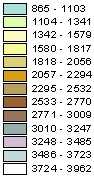
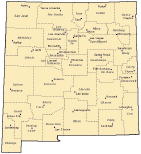
 Souvenir Rosy-finch T-shirt (Not an advertisement):
OUT OF STOCK AT CREST HOUSE!
 Generous
fit. high quality, heavyweight t-shirts, Gildan Ultra Cotton Ts, 100%
cotton; 6.1 oz., with a Screen-printed design. They are
pre-shrunk, have a taped neck and shoulders, and double needle
stitching throughout the garment. Light Blue or Athletic Gray, in sizes
M, L and X, with large or small logo. (Designed and marketed by
Ken Schneider. Wholesale profits from sale of shirts, pins and
patches are contributed to the CNMAS Ryan Beaulieu Memorial Scholarship
Fund.
Generous
fit. high quality, heavyweight t-shirts, Gildan Ultra Cotton Ts, 100%
cotton; 6.1 oz., with a Screen-printed design. They are
pre-shrunk, have a taped neck and shoulders, and double needle
stitching throughout the garment. Light Blue or Athletic Gray, in sizes
M, L and X, with large or small logo. (Designed and marketed by
Ken Schneider. Wholesale profits from sale of shirts, pins and
patches are contributed to the CNMAS Ryan Beaulieu Memorial Scholarship
Fund.
EMBROIDERED PATCHES AND METAL PINS
NOW AVAILABLE --
PATCHES ARE FULLY EMBROIDERED, 3 INCH, 7 COLORS-- Pins are round, 1
inch solid brass, black nickel metal coated and filled with 5
colors, covered by clear epoxy dome. Ideal for the serious
"lister" to wear on vest or hat.
ON SALE AT CREST HOUSE
Designed
by Ken Schneider. Wholesale profits from sale of shirts, pins and patches are contributed to the CNMAS Ryan Beaulieu Memorial Scholarship Fund.