By
Ken
Schneider
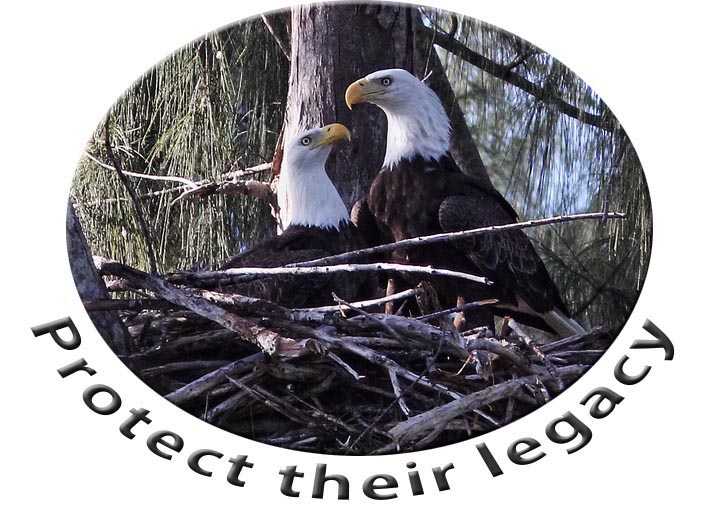

This
page provides an ongoing acount of observations of the first active
Bald Eagle nest in Broward County,
Florida, since their population suffered a dramatic decline in the
lower 48 States in the middle of the 20th Century. Only
one other Bald Eagle nest had ever been reported in Broward County
during the 21st Century. That nest was deep in the Everglades on the
Miccosukee Reservation, but it was never found to contain eggs or young
birds. More remarkably, this pair selected the City of Pembroke Pines
for its homesite. They raised at least one eaglet during
the winter and spring of 2007-2008, despite the hazards
of nesting very
close to densly populated housing developments, a major
thoroughfare, a police shooting range and the new West Broward High
School. Here, we will report on the eagles, to see whether
they can
succeed in raising another family at the same site. We
will also follow the plans of a
group of Middle School science students, as they develop and implement
a study to determine
whether and how
traffic density may affect the birds' behavior.
| <READ OR POST TO FORUM
(LATEST OBSERVATIONS)> <CONTACT> <Ken's
BLOG> <ROSYFINCH
HOME> |
www.flickr.com
|

Subscribe to Ken's Blog (RSS)
SELECTIONS FROM KEN'S BLOGS <Index to all Blogs>
Eagles migrate in opposite directions while fish move up and down
 Those
of us
who have been watching our local pair of Bald Eagles and their progeny
for the past three breeding seasons are well aware that our Florida
eagles are "contrarians" when it comes to migration. While nearly all
other migratory birds head south after nesting and rearing their young,
our local eagles do just the opposite-- they turn north.
Well, this is not exactly the case, as Florida's adult Bald Eagles,
especially those from the southernmost end of the peninsula, don't
exhibit as much wanderlust during the non-breeding season. Generally,
the adults tend to move about locally, or at most, regionally in the
lower third of the Sunshine State, while younger (especially
first-year) birds often become long-distance travelers... » Read
full article on[Rosyfinch Ramblings]
Those
of us
who have been watching our local pair of Bald Eagles and their progeny
for the past three breeding seasons are well aware that our Florida
eagles are "contrarians" when it comes to migration. While nearly all
other migratory birds head south after nesting and rearing their young,
our local eagles do just the opposite-- they turn north.
Well, this is not exactly the case, as Florida's adult Bald Eagles,
especially those from the southernmost end of the peninsula, don't
exhibit as much wanderlust during the non-breeding season. Generally,
the adults tend to move about locally, or at most, regionally in the
lower third of the Sunshine State, while younger (especially
first-year) birds often become long-distance travelers... » Read
full article on[Rosyfinch Ramblings]Who “Owns” the Eagles?
 When
a pair of Bald Eagles decided to set up housekeeping in a tall
Australian Pine just off busy Pines Boulevard in Pembroke Pines,
Florida, they initiated an interesting chain of events. They were first
"discovered" in March of 2008 by Kelly Smith, a local Middle School
science teacher, who saw adults and a nearly full grown eaglet in the
nest. For a year or two before that, several local residents (and even
a bus driver who regularly ran the Pines Boulevard route) had seen
eagles roosting and carrying nest materials and prey in that general
location. All known Bald Eagle nests in Florida are registered by the
Fish & Wildlife Conservation Commission and their locations are
pinpointed on the FWC Web site, but the majority of South Florida
residents are unaware that, among the lower 48 states, Florida is
second only to Minnesota in the number of active eagle nests.... » Read
full article on[Rosyfinch Ramblings]
When
a pair of Bald Eagles decided to set up housekeeping in a tall
Australian Pine just off busy Pines Boulevard in Pembroke Pines,
Florida, they initiated an interesting chain of events. They were first
"discovered" in March of 2008 by Kelly Smith, a local Middle School
science teacher, who saw adults and a nearly full grown eaglet in the
nest. For a year or two before that, several local residents (and even
a bus driver who regularly ran the Pines Boulevard route) had seen
eagles roosting and carrying nest materials and prey in that general
location. All known Bald Eagle nests in Florida are registered by the
Fish & Wildlife Conservation Commission and their locations are
pinpointed on the FWC Web site, but the majority of South Florida
residents are unaware that, among the lower 48 states, Florida is
second only to Minnesota in the number of active eagle nests.... » Read
full article on[Rosyfinch Ramblings] An
essential ingredient of Bald Eagles' breeding habitat is the presence
of
suitable roost trees within sight of the nest. Our local pair of eagles
is no exception, and they favor three or four tall Australian Pines
along Pines Boulevard, as well as the trunks of melaleuca trees in the
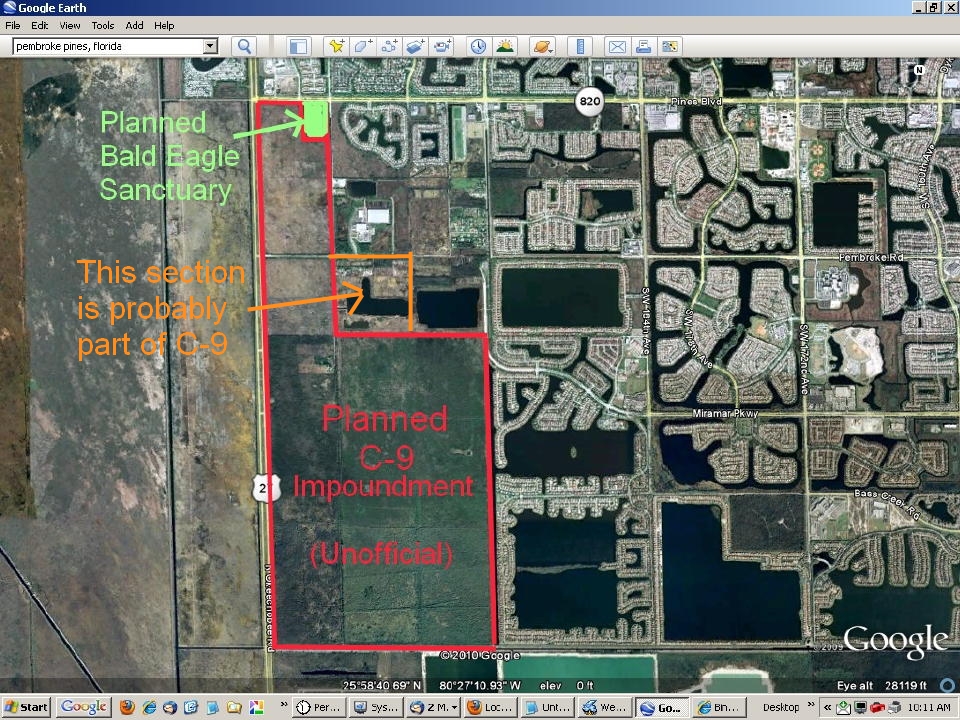
SW Florida Water Management District land just to the west of the
proposed City of Pembroke Pines Bald Eagle sanctuary. These exotic
trees were all killed by herbicides a few years ago. The are badly
decayed and many fall down with each windstorm. As these roosting sites
disappear, we can expect the eagles to seek out other prominent
perches, such as power poles. Electrocution and collision with power
lines are major causes of urban Bald Eagle mortality. On June 11, Bald
Eagle Sanctuary Steering Committee members Barry Heimlich of South
Florida Audubon, and veteran eagle watcher Trisha Norton met at the
site of the Pembroke Pines nest with Doug Macke, Florida Power
&
Light Company Broward Area Power Systems Environmental Coordinator, to
discuss this hazard. They were pleased to learn that Doug had been
observing the eagles since last year, when the nest was first
"discovered," and the company had already taken some action. » Read
full article on[Rosyfinch Ramblings]
An
essential ingredient of Bald Eagles' breeding habitat is the presence
of
suitable roost trees within sight of the nest. Our local pair of eagles
is no exception, and they favor three or four tall Australian Pines
along Pines Boulevard, as well as the trunks of melaleuca trees in the
SW Florida Water Management District land just to the west of the
proposed City of Pembroke Pines Bald Eagle sanctuary. These exotic
trees were all killed by herbicides a few years ago. The are badly
decayed and many fall down with each windstorm. As these roosting sites
disappear, we can expect the eagles to seek out other prominent
perches, such as power poles. Electrocution and collision with power
lines are major causes of urban Bald Eagle mortality. On June 11, Bald
Eagle Sanctuary Steering Committee members Barry Heimlich of South
Florida Audubon, and veteran eagle watcher Trisha Norton met at the
site of the Pembroke Pines nest with Doug Macke, Florida Power
&
Light Company Broward Area Power Systems Environmental Coordinator, to
discuss this hazard. They were pleased to learn that Doug had been
observing the eagles since last year, when the nest was first
"discovered," and the company had already taken some action. » Read
full article on[Rosyfinch Ramblings]
|
|||||||||||||||||||||||||||||||||||||||||||||||||||||||||||||||||||||||||||||||||||||||||||||||||||||||||||||||||||||||||||||||||||||||||||||||||||||||||||||||||||||||||||||||||||||||||||||||||||||||||||||||||||||||||||||||||||||||||||||||||||||||||||||||||||||||||||||||||||||||||||||||||||||||||||||||||||||||||||||||||||||||||||||||||||||||||||||||||||||||||||||||||||||||||||||||||||||||||||||||||||||||||||||||||||||||||||||||||||||||||||||||||||||||||||||||||||||||||||||||||||||||||||||||||||||||||||||||||||||||||||||||||||||||||||||||||||||||||||||||||||||||||||||||||||||||||||||||||||||||||||||||||||||||||||||||||||||||||||||||||||||||||||||||||||||||||||||||||||||||||||||||||||||||||||||||||||||||||||||||||||||
NOTES |
|||||||||||||
| EVENTS | 2007 -2008 |
2008 -2009 |
2009 -2010 |
2010 -2011 |
2011 -2012 |
2012 -2013 |
2013 -2014 |
2014 -2015 |
2015 -2016 |
2016 -2017 |
2017 -2018 |
2018 -2019 |
2019 -2020 |
| FOOTNOTES REFER TO YEARS IN MILESTONE TABLE ABOVE Names given to eaglets (Middle School Contest 2008-09 and 2009-10); Eagle Facebook page 2013-14 Disturbances |
*
FWC Aerial survey ** "P Piney 1" |
*
"Hope" ** "Justice" 20 FEB 2009 Miami Herald article attracted crowds to nest; City subsequently placed fence and parking restrictions in front of nest |
* "Lucky" ** "Chance" *** "Courage" |
*
"P Piney 7" ** "P Piney 8" 15 MAY 2011 Roadway construction in front of nest STARTED |
*
"P Piney 9" ** mortality assumed; ground search 30 MAR did not locate it ***this eaglet may have hatched 2-6 days after the first or second egg hatched or failed 01 OCT 2012 Roadway construction COMPLETED |
*P
Piney 10 & 11 **P Piney 10 mortality assumed between 15 - 21 day of age |
Adults given names of Pride (male) & Joy (female) P Piney 12 &13 18 JAN 2014 A third adult Bald Eagle appeared and was driven away by the pair. |
Joy disappeared, last seen at nest OCT 30, 2014; may have been seen 1 mi SE of nest with injured foot on DEC 7. New female (Jewel) appeared at nest same day. Copulation observed but no evidence of breeding. |
Pride
and Jewel returned, refurbished nest and eggs were laid DEC 13. Limb fell on nest on projected hatch date. Eaglet documented being fed at 2 days age but no further evidence of brood and nest susequently abandoned. P Piney 14 15 & 16 *Second brood hatched but older eaglet killed her sibling on APR 11.or possibly APR 16? |
Pair got off to
late start, almost surely because juvenile was dependent into SEPT P Piney 17 & 18 |
* second eaglet P Piney 20 was being fed but not seen after JAN 14; Presume lost JAN 24-29 P Piney 19 & 20* |
P Piney 21 & 22 |
P Piney 23 lost after storm JAN 10 P Piney 24 & 25 fledged successfully |
INTERVALS (DAYS) |
|||||||||||
| EVENTS | 2008-2009 | 2009-2010 | 2010-2011 | 2011-2012 | 2012-2013 | 2013-2014 | AVERAGE | MEDIAN | REMARKS | ||
| Period between adult arrival and egg laying | Unknown | 87 | 56 | 67 | 58 | 49 | 73.2 | 68 | Data collection commenced after adults arrived in 2008 | ||
| Incubation period | 35 | 34 | 35 | 35 | 35 | 35 | 34.8 | 34.5 | - | ||
| Age when first eaglet fledged | 77 | 81 | 68 | ~65 (62-68) | 86 | 82 | ~76.5 | ~73 | Age of 2011-2012 eaglet estimated | ||
| Days between first branching and eaglet fledging | 8 | 8 | 8 | N/A | 4 | 4 | 6.4 | 6 | Branching not observed 2011-2012 | ||
| Age of eaglet when last seen at nest | 138 | 139 | 102 | ~64 (61-67) | 103 | 110 | 118.4 | 120.5 | 2011-2012 data not included in avg/mean (fledgling eaglet not observed) | ||
| Days eaglet remained at nest after fledging | 61 | 27 | 34 | N/A | 66 | 28 | 43.2 | 46.5 | 2011-2012 data not included in avg/mean | ||
| PRIDE
& JOY'S (and Jewel's) FAMILY ALBUM (FULL EAGLE MILESTONE SPREAD SHEET IS AVAILABLE AT THIS LINK) |
||||||
| No. | SEASON | EAGLET NAME | HATCH DATE | FLEDGE DATE | REMARKS | PHOTO (click for larger image) |
| 1 | 2007-08 | P Piney 1 | ? | 15
MAR
2008 * |
*Nest discovered after fledging |  |
| 2 | 2008-09 | Hope | 17 JAN 2009 | 4 APR 2009 | 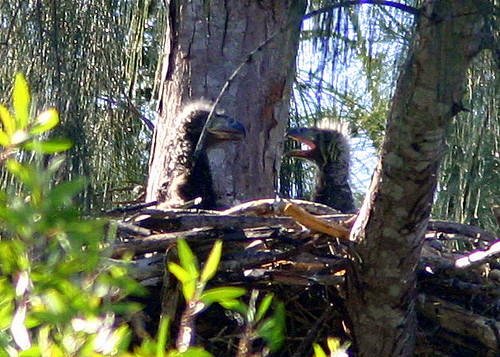 |
|
| 3 | Justice | ~19 JAN 2009 | 6 APR 2009 | |||
| 4 | 2009-10 | Lucky | 22 JAN 2010 | 13 APR 2010 | 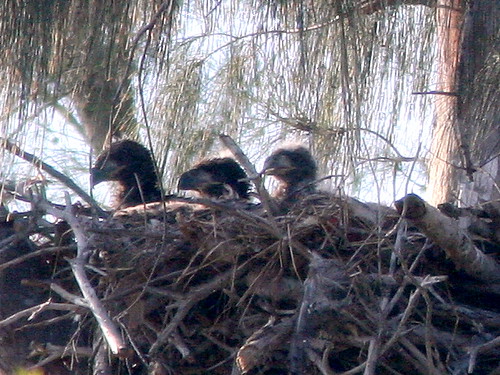 |
|
| 5 | Chance | ~24 JAN 2010 | 18 APR 2010 | |||
| 6 | Courage | ~26 JAN 2010 | 23 APR 2010 | |||
| 7 | 2010-11 | P Piney 7 | 15 JAN 2011 | 24 MAR 2011 | 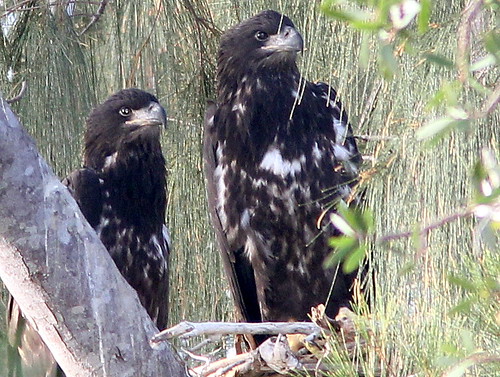 |
|
| 8 | P Piney 8 | ~17 JAN 2011 | 26 MAR 2011 | |||
| 9 | 2011-12 | P Piney 9 | 15 JAN 2012 | 23
MAR
2012 ** |
**Never seen after fledging; mortality assumed; appeared small for age; may have fledged too early; unconfirmed report of loss of earlier sibling | 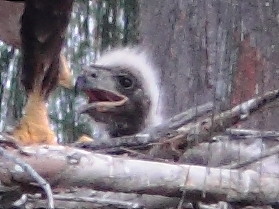 |
| 10 | 2012-13 | P Piney 10 | 29 DEC 2012 | 26 MAR 2013 | 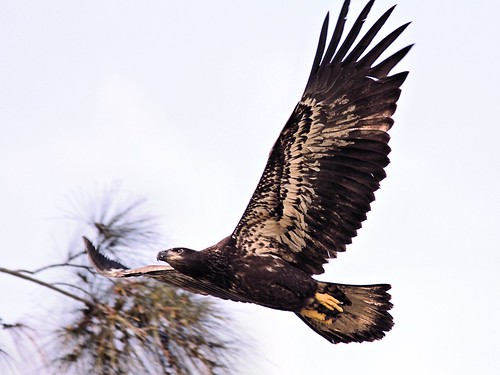 |
|
| 11 | P Piney 11 | ~31 DEC 2012 | *** | ***30 MAR 2013 Mortality assumed, when ground search failed to locate | 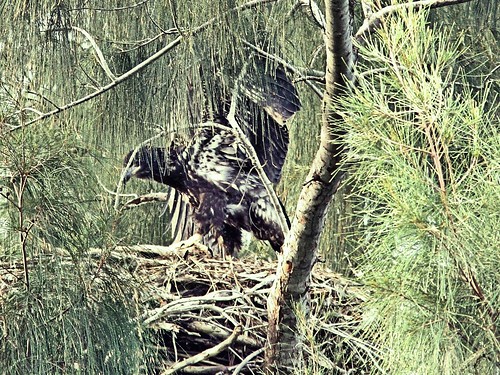 |
|
| 12 | 2013-14 | Honor |
11 JAN 2014 | 03 APR 2014 | 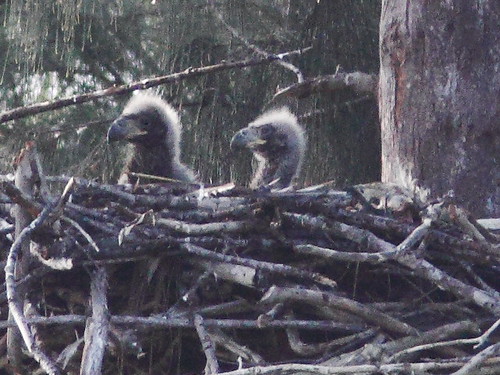 |
|
| 13 | Glory | ~13 JAN 2014 | 05 APR 2014 | |||
| - |
2014-15 |
- |
- |
- |
Joy
disappeared Oct 30 and new female (Jewel) appeared DEC 7 but did
not breed |
|
| 14 |
2015-16 |
P
Piney 14 |
~17
JAN 2016 |
- |
Only
eaglet documented being fed at 2 days age, never seen, and
storm-damaged nest abandoned |
|
| 15 |
Spirit |
~16
MAR 2016 |
16
JUN 2016 |
Second
brood this season after storm damage. First time this has occurred at
this nest |
||
| 16 |
P
Piney 16 |
~19
MAR 2016 |
- |
Killed
(siblicide) APR 11, 2016 |
||
| 17 |
2016-2017 |
P
Piney 17 |
~
05 FEB 2017 |
28
APR 2017 |
||
| 18 |
P
Piney 18 |
~08
FEB 2017 |
6
MAY 2017 |
|||
| 19 |
20-17-2018 |
P
Piney 19 |
10
JAN 2018 |
2
APR 2018 |
||
| 20 |
P
Piney 20 |
~14
JAN 2018 |
- |
Observers
agreed that two eaglets were being fed until 24-29 JAN but never
seen/photgraphed |
||
| 21 |
2018-2019 |
P
Piney 21 |
~10
JAN 2019 |
31
MAR 2019 |
||
| 22 |
P
Piney 22 |
~13
JAN 2019 |
1
APR 2019 |
|||
| 23 |
2019-2020 |
P
Piney 23 |
~02
JAN 2020 |
This
eaglet and possibly a nestmate were lost after a storm around
10-12 JAN 2020 |
||
| 24 |
P
Piney 24 |
~14
MAR 2020 |
21
MAY 2020 |
|||
| 25 |
P
Piney 25 |
~17
MAR 2020 |
02
JUN 2020 |
|||
| 26 |
2020-2021 |
P Piney 26 |
~07 MAR 2021 |
- |
Adults
relocated and were using new nest but storms disrupted it. P
Piney 27 fell to ground on MAR 18, was severly injured and later
euthanized; P Piney 26. was grounded on MAR 28, suffered broken
wing and located after 5 days. Rehabbed and flew free on June 14 . |
|
| 27 |
P Piney 27 |
~10 MAR 2021 |
- |
|||